1Inflation re-accelerated in October, and a December rate hike is now close to certain
The data came in hot on Wednesday. FRED shows the core PCE price index up 0.29% in October. That lifts the annual rate to 3.3%, from 3.1% in September. Headline PCE rose to 3.8% a year. Reuters reported third-quarter growth revised sharply higher, and FRED now shows 4.3% annualised. Weekly jobless claims fell to 189,000, from 202,000. The Fed's Beige Book described continued growth and sticky inflation.
A hot price print in a strong economy removes the case for a pause. Prediction markets read it that way. Kalshi prices a 25bp December hike at 92%, unchanged on the day, on about 3 million contracts of open interest. A hold is 5%. Polymarket has the hike at 93.5% on $4m of liquidity. FRED shows the Fed's target range topping out at 4.00% today.
The tape swung hard and then recovered. Stocktwits reported the Nasdaq down 4% intraday and the Dow down more than 1,000 points. A fresh US tariff proposal on Brazil landed on top of the inflation print, including a 10% duty on aircraft. By the close, was down only 0.7% and 0.3%. Yahoo's board showed the Dow finishing higher and small caps up 0.7%. The 10-year Treasury yield sat near 4.85%, and the gap over the 2-year narrowed to 0.24 points on FRED.
On Excess Returns, Jeff deGraaf of Renaissance Macro argued that high real yields are the dominant force. He said the S&P 500's free-cash-flow yield now roughly matches the 10-year inflation-protected Treasury yield, which he called the first time since before 2008. A bond paying that yield with no earnings risk competes directly with stocks. He said that pressure falls hardest on long-duration assets, and gold is his first exhibit. He is holding more cash than usual, tilting toward healthcare and energy, and cutting a roughly 20% commodity weighting. Yet he also said his "spidey sense" is that markets are "close to peak hawkishness". On The Compound and Friends, Ben Carlson doubted the Fed should hike at all with inflation near 3.5% and nominal growth around 7%.
So what: the October print settles December, so the open question moves to 2027. deGraaf's real-yield argument and his peak-hawkishness hunch pull in opposite directions. The Fed's projections on 9 December decide which one dominates.
2Anthropic's IPO is trading at its offer price, and the case against it rests on structure rather than growth
closed at $82.79, up 1.1%, just under its $83 offer price. Reuters and CNBC both framed the slide as a test of how much investors will pay today for AI profits that may arrive later.
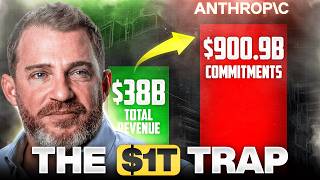
Ross Givens, on his channel, read the prospectus and called the stock a sell at more than $1 trillion. He did not dispute the growth. He put last quarter's revenue at 12 times the year before. His objections were structural. Anthropic is a public benefit corporation, so its directors must weigh shareholder returns against "the long-term benefit of humanity". A trust holding one share picks most of the board. The seven founders keep more than half the vote while holding just 2% of their listed stock. He said its compute and data-center commitments rose from about $500bn to $900bn between filings, many of them take-or-pay. He put the valuation at 34 times sales. Givens sold a 99-cent membership in the same video.
On Prof G Markets, George Noble of Noble Capital Advisors told people to "run not walk" from . His focus was supply, not the business. He said about 300 million shares could be sold from the first day and more than 3 billion unlock next month. On Equity Mates, Bryce and Ren said they expect a chance to buy below $83 and see no need to rush. Michael Batnick, on The Compound and Friends, said he would buy at a much lower valuation. Polymarket prices an Anthropic bankruptcy by the end of 2027 at 8.5%, on about $200,000 of liquidity.
So what: the share supply is the near-term risk, and it is dated. Noble's unlock schedule is a mechanical overhang that the growth numbers cannot offset. It is the next test of whether the offer price holds.
3Nvidia's governance has become a credit question, while dip-buyers keep adding
CNBC reported that S&P warned it could cut Nvidia's credit rating over "rising" management and governance risk. fell 3.9% to $149.30. Reuters reported how the administration concluded Jensen Huang is not a national security threat. Vice President Vance said he was assured Huang is not under Justice Department investigation.
On Prof G Markets, governance scholar Charles Elson argued the board showed weakness by reversing itself within a week. He said Huang was removed for code-of-conduct breaches, not on national security, and those facts have not changed. Noble said he is short and and sees a "reasonable chance" goes bankrupt. He argued the AI build-out depends on outside capital that is getting harder to raise. closed down 5.1%.
The buyers made the opposite case. The host of Business with Brian said he is dollar-cost averaging into seven chip and software names. He made his largest weight, at about 25%, citing a forward price-earnings ratio near 11. The others were , and at about 15% each, and , and at about 10%. On Equity Mates, both hosts said they topped up after Monday's 31% jump. They argued demand for its chips does not depend on who runs it. deGraaf said Nvidia came close to his washout signal for a tradable low but did not trigger it.
So what: S&P's warning converts a governance story into a funding-cost story. The buyers' case rests on earnings and the critics' on governance, and the 1–3 December hearings test the critics' side first.
What the sources recommended
Eight buys and five sells came from six independent videos. On Business with Brian, the host said he is buying , , , , , and over the long term. He sized Micron smallest because memory is cyclical. The video carried a disclosed sponsor. Equity Mates's hosts said they added to . Michael Batnick, on The Compound and Friends, said he bought Disney as the stock broke out of a long slump. He also said he bought a memory fund and during Friday's sell-off and sold both at Monday's open. Two sources called a sell: Ross Givens on valuation and governance, and George Noble on share unlocks. Noble also named and as shorts and as a bankruptcy risk.
Thanksgiving leaves one half-session before the Nvidia hearings and the hike
US markets are closed on Thursday and reopen for a shortened session on Friday. Nvidia's sworn interviews begin on 1 December, and Senate testimony follows on 3 December. Dollar General, Kroger, Macy's and DocuSign report on 3 December, a read on how inflation is landing with consumers. The Fed decides on 9 December. Oil stays a live risk. Reuters reported Iran claiming mine strikes on ships in the Strait of Hormuz. Polymarket gives traffic returning to normal by 31 December just 2.8%. Kalshi's contracts put Friday's WTI settlement near $84.