1The AI selloff spread from the neoclouds to the hyperscalers, and the dispute is now funding, not valuation
October closed with a rout. On Friday the S&P 500 fell 1.82% to 7,580 and the Nasdaq fell 2.86%, its worst day since June, on Yahoo Finance's close. Intel fell about 28.6% on a weak outlook. Yahoo Finance called it the stock's worst day since 1974. Amazon fell about 7% after its results, TradingKey reported, and memory and storage names slid with it. The Nasdaq-100 is heading for its first monthly loss since July.
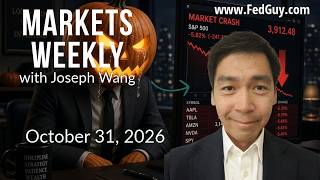
Joseph Wang, the former New York Fed trader, said on his Markets Weekly channel that the AI trade is "imploding from the outside in". The neoclouds broke first. Then Meta fell 7% on a good quarter, Alphabet 13% and Amazon 6%. He thinks "the top is in". He expects a slow grind lower of 20% to 30%, not a dot-com-style collapse. Alex Altmann, global head of equity tactical strategies at Barclays, told The Compound and Friends the same thing from the positioning side. Retail, volatility-control funds and systematic strategies are all heavily long. He sees the S&P at 7,100 to 7,200, near its 200-day average and about 17.5 times forward earnings. His funding numbers drive the call. He estimates AI capex at $1.2 trillion next year, with roughly $1 trillion of AI revenue needed by 2028 against a run rate near $400 billion. He says 2026 is the first year of net US equity issuance in his data, with another $1.2 trillion of corporate bonds competing for the same money. The gap between B and CCC credit spreads is near 8%, a level seen only four other times since 1996. Each time, the S&P was already at least 12% below its high.
The other side argues on price, not funding. Josh Brown, of Ritholtz Wealth Management, told Prof G Markets that "if it is a bubble, it is the most pathetic bubble I have ever seen". He put Nvidia at 15 times forward earnings. He cited SanDisk , Micron and Western Digital at price-to-growth ratios between 0.08 and 0.13. No semiconductor stock in the SMH fund is at a 52-week high, he said. Jay Hatfield, of Infrastructure Capital Advisors, called it a "reverse bubble" on Excess Returns. He says CoreWeave sold off as a "massive overreaction" and puts it at $60 to $80. One caveat on independence: Brown co-hosts The Compound and Friends, the show where Altmann made the bear case. Brown and Altmann therefore count as one network, not two separate channels.
The two camps are not arguing about the same thing. The bulls say multiples are already low. The bears say the money to keep building is getting dearer. Friday sided with the funding view in the near term. Neither side said what would end the argument before January, when Altmann says capex budgets next reset. The so what: cheap multiples have not stopped the selling, because the market is now pricing how the spending gets paid for.
2Tuesday's vote is priced as a Democratic House, and its market meaning is contested
Polymarket prices Democratic control of the House at 94.5%, on $1.45 million of 24-hour volume in that contract. Democratic control of the Senate is at 72.5%, up 2 points, on about $239,000. Ed Elson, on Prof G Markets, predicts a "blue wave" like 1890. That is an opinion piece, but it matches what the markets price.
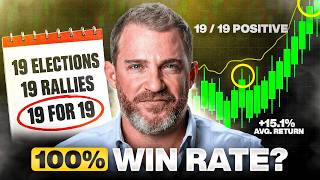
The sources split on what a sweep means for stocks. Wang expects a sweep to be good for bonds. Tariffs, the Iran war and data-centre growth are three reasons the Fed is hiking, and he thinks a Democratic Congress would push back on all three. He thinks it would be bad for stocks, through higher taxes, investigations and policy uncertainty, and that it points to a recessionary climate. Hatfield's worry is similar but later. He warns that a 30% corporate tax rate in 2028 would mean a 30% decline in stocks over time. Ross Givens takes the other side, on base rates. He says the S&P was higher 12 months after all 19 midterms since 1950, by about 15% on average. He also notes that a Republican president with a Democratic Congress has been the weakest pairing, at about 7% a year. Givens sold his $5 trading membership in the same video.
The base rate covers every past outcome, but none had this mix of tariffs, a war and a hiking Fed. Wang's argument depends on that mix. The so what: the vote is mostly priced already. What moves markets after it is whether a new Congress acts on tariffs and war funding, and that cannot be known on Wednesday.
3The war premium went into crude, not gold
Oil rose 2% on Thursday to a six-month high on fears of escalation with Iran, Reuters reported. December WTI was at $104.12 on Friday, up 2.08%, on Yahoo Finance's snapshot. Over the same two days Reuters reported limpet mines on a tanker in the Strait of Hormuz. Iran's IRGC navy said four tankers caught fire. The US ordered non-emergency staff to leave Saudi Arabia. Iranian envoys met Qatari mediators on Saturday "as threat looms of US strikes after midterms".
Polymarket's ceasefire contracts point to the post-vote window. The US–Iran ceasefire held through 31 October at 98.7%. It is priced at 37.5% to last through 30 November and 25.5% through 31 December, on $61,000 of 24-hour volume in the December contract. A senior US–Iran diplomatic meeting by 30 November fell 7 points to 26%. Wang does not expect strikes before the vote, because the President "keeps turning it down". He warns that strikes would bring "huge retaliation" and an oil spike.
Gold went the other way. It fell 3.29% on Friday to $3,898.90 and lost the $4,000 mark. Wang expects it to keep trading poorly until markets price rate cuts. Hatfield gives a one-line reason: in a war the dollar is strong and rates are high, and those two drive gold. A Compound and Friends clip notes that energy is still under 4% of the S&P 500 despite a closed strait. Exxon and Chevron reported what NBC called blowout profits on Friday. The so what: the conflict is being priced through oil and the dollar, not through gold. That holds until the market expects cuts.
4Anthropic's filing showed thirteenfold revenue growth against up to $800 billion of compute commitments
Anthropic's S-1 was the week's other big document. Josh Brown, on Prof G Markets, cited first-half revenue of $16.3 billion, up from $1.2 billion. He cited an operating loss of $693 million, narrower than the $2.1 billion a year earlier. He also cited $112.4 billion of cash, about 80% of the $141 billion raised. He called the $80.7 billion headline net loss a "red herring" from accounting for financing. Ed Elson's concern is the compute commitments. He counted more than $160 billion with Broadcom, $120 billion with SpaceX and $10 billion with Amazon. The total is between $500 billion and $800 billion, Scott Galloway said, partly in options rather than firm contracts. The filing says building its own compute will "change the cash flow profile of the business," Elson said.
Galloway thinks there is a "non-zero probability" that Anthropic becomes the world's most valuable company within four years. Brown doubts its moat matches SpaceX's, Nvidia's or Apple's. Wang adds a third view: there are "many accounts" that revenue growth flattened after the third quarter. Brown said only that third-quarter growth slowed. The so what: the listing tests whether the market will pay for growth funded by commitments, the same question the hyperscalers faced this week.
5A December hike is still priced near 70% even as the ten-year slipped below 5%
On Kalshi, a 25bp December hike trades at 69%, from 70% a day earlier, with a hold at 28%. Volume was thin at about $8,800 in the hike contract over 24 hours, against open interest of about $335,000. Polymarket has the hike at 69.5%, down 1 point. The ten-year Treasury yield closed at 4.98% on Thursday, down from 5.05%, FRED data show. The effective fed funds rate is 3.88%. The employment cost index rose 0.79% in the third quarter (178.57, from 177.18), in data released Friday. St. Louis Fed President Alberto Musalem said tighter policy is needed "soon," CNBC reported.
Hatfield's rule of thumb explains why yields stalled. He says the ten-year trades about 100 basis points above where the market expects fed funds to stop. One more hike therefore caps it near 5%. He calls the hikes a mistake. On his measure, CPI using real-time rents is running at 1.2%. Wang offers the path to a turn. A fall in stocks hits household wealth, which means fewer hikes and eventually cuts, "maybe as soon as December". The so what: the hike odds have barely moved through a 2.9% Nasdaq drop. The October jobs report on 6 November is the next print that could move them.
What the sources recommended
Only three single-name calls came out of eight episodes, all from one guest. Two of the three came with caveats from the guest himself. Jay Hatfield, on Excess Returns, named Marvell as his favourite idea. He cited the Oracle agreement implying $120 billion of revenue and his estimate of $14 of 2028 earnings. Then came his caveat: Marvell had just announced what he calls a dilutive merger. He cut his target to $350 from $425 and is writing calls at $350. His funds bought the stock near $90. He used Cheniere as an example of contracts priced below market, at about $12 per MCF against roughly $30 in Europe, and said "you want to go buy Cheniere". That was an analogy, not a researched pitch. On the other side, he said investors "don't buy Walmart at a four and a half" price-to-growth ratio.
Two reiterates are not fresh calls. Ross Givens repeated that Hinge Health is up 24% since his 8 September pick. A Givens clip re-cut his Jones Lang LaSalle case from earlier in the week. Galloway repeated that Amazon was his big-tech pick for 2026, on robots in its retail business.
The vote, Big Tech earnings and the jobs report test these claims within a week
Apple and Berkshire Hathaway report on 2 November, per Finnhub's calendar. Tuesday 3 November is election day. AMD , Amgen, Booking and Supermicro report after that day's close, adding more AI earnings while the votes are counted. The October jobs report lands on 6 November, per FRED's release calendar. It is the print most likely to move December's hike odds. Strike risk on Iran is priced to rise after the vote, so oil's next move may come within days of it.