1Doubts about AI spending turned a rally into a Nasdaq rout, and the bear case now comes with price lists
Wednesday's tech rally reversed on Thursday. CBS News reported the Nasdaq fell about 750 points as investors reassessed AI spending. Meta led the decline, down about 7%, according to Barchart. That came a day after a third-quarter beat that first sent the shares higher. On Prof G Markets, recorded before Thursday's open, Mark Mahaney of Evercore called the report good. He said ad prices rose 14% and impressions about 10%. He also confirmed full-year capex of $135 billion to $145 billion, and a new non-voting share class that could fund more of it. The market took the second part harder than the first.
The selling spread down the supply chain. The Telegraph reported that Nvidia's chief executive warned of an AI funding slowdown. Lam Research fell after citing supply-chain constraints, per Yahoo Finance. Western Digital dropped about 6% ahead of its results. This is a read-through, not a company-specific miss. None of these firms cut guidance; investors re-priced the whole spending chain at once.
Ross Givens, on his own channel, turned the bear case into a shopping list. He cited JPMorgan's count that 41 AI-linked stocks make up half the S&P 500. He named five he wants after a bust, each at a price far below today's. Microsoft at $336, against about $530 now. Alphabet at $189, against about $346. Amazon at $142, Taiwan Semiconductor at $178, and Nvidia at $88. Those are discounts of 37% to 60%. He was explicit that these are not buys at today's prices. His best guess for the bust is 2028 to 2029, and his trigger is a hyperscaler capex cut in late-October earnings.
He also said why Microsoft tops his list. By his figures, Alphabet's long-term debt rose from $10.9 billion at end-2024 to $98 billion by June. Amazon's went from $58 billion to $133 billion, and Meta's from $28.8 billion to $83.7 billion. Microsoft's fell, to $40.3 billion. So in his reading, a capex cut would turn into free cash flow fastest at Microsoft. At the others, part of that cash would go to lenders first. The so what: the rout has not yet produced the trigger Givens is waiting for. That test arrives when Microsoft, Alphabet and Amazon report next week.
2Power and data-centre stocks are the same AI bet, not a hedge against it
Two sources with different methods reached the same warning on the same day. Givens said utilities stopped being defensive once data centres became their growth story. He noted JPMorgan's AI basket includes eight utility stocks. Matt Jones, a portfolio manager at Fidelity, made the same point on Equity Mates from a quantitative angle. He said holding semiconductors, utilities and industrials can look diversified when all three ride one AI theme.
Jones put numbers on how narrow the market is. He said the top 20% of the S&P 500 drove 98% of its return over the past year. Only 43% of the index sits above its 200-day moving average. He called the concentration a "wolf in sheep's clothing" for index holders. His own fund's top five holdings are still Nvidia, Alphabet, Microsoft, Taiwan Semiconductor and Samsung. He controls the risk through position size, not by avoiding the names. His personal view is that the AI trade has two to three good years left.
The two agree on timing more than their tone suggests. Givens expects the bust in 2028 or 2029; Jones gives the trade two to three years. Where they differ is what to hold meanwhile. Givens wants cash, which he said earns about 4.1% in three-month Treasury bills, plus staples and gold. Jones wants out-of-favour companies with strong fundamentals. Note the source independence here: this Equity Mates episode was supported by Fidelity, Jones's employer, and the hosts said so on air. The so what: a portfolio that added power names as a hedge may have doubled its AI exposure instead.
3The rout priced out an October hike even with jobless claims near 57-year lows
Prediction markets moved sharply toward a hold at the 28 October Fed meeting. Kalshi prices a hold at 93%, up from 88% a day earlier, on about 415,000 contracts traded in 24 hours. A 25-basis-point hike fell to 6% from 11%. Polymarket shows a hold at 93.5%, up six points, on an event with about $3.1 million of 24-hour volume. Two deep venues agree.
The labour data points the other way. FRED shows initial jobless claims at 194,000 for the week to 17 October, down from 200,000. Reuters called that near a 57-year low. Strong hiring is a reason to keep rates high, not to back off. The haven bid explains the move better. Bloomberg reported Treasuries rallied as AI fears pushed money into bonds. The 30-year yield eased to 5.42% on 21 October from 5.48% two days earlier, per FRED. The 10-year sat at 5.13%. Credit stayed calm, with the high-yield spread narrowing to 3.27% from 3.33%.
So which force dominates? For October, the haven bid. For December, neither has won. Kalshi still prices a December hike at 72%, barely down from 75%. The market is treating Thursday as a risk-off day, not a change in the rate path. Givens added a warning. He said the Fed raised rates in September with inflation near 3.7%, so it may not rescue a falling market the way it did in 2001. FRED confirms the effective funds rate rose to 3.75% in September from 3.63%. The so what: an equity sell-off alone has not been enough to move the year-end rate path.
4Oil's war premium is rising again while the White House calls the attacks fake
Gulf risk kept building. Reuters reported Saudi Aramco told staff to evacuate its Dhahran headquarters, citing sources. Reuters also reported fresh Houthi strikes on Saudi Arabia. FRED's spot Brent was $115.22 on 20 October and spot WTI $107.89. December WTI futures traded near $100.54, up about 1% overnight, per Yahoo Finance. Reuters said US airlines are struggling to pass soaring fuel costs into fares.
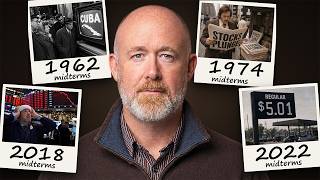
The President disputed the threat in a post. He wrote that Iran is "making up fake hits, mines" to lift oil before the midterms. He also quoted a Wall Street Journal headline that more oil now leaves the Persian Gulf than before the war. Citi took the other side in a Reuters report, saying oil risks remain skewed to the upside. The tail market sided with Citi on the day. Kalshi prices WTI above $115 by year-end at 38.5%, up from 35.4%. A day earlier that contract had fallen. The so what: if Gulf exports really are back above pre-war levels, the premium is about attacks on infrastructure, not lost barrels. That makes it fragile in both directions.
What the sources recommended
Only two single-name buys came out of four videos, both from one fund manager on a show his firm sponsored. Matt Jones of Fidelity, on Equity Mates, presented Amer Sports and Scout24 as stocks his fund holds against the momentum trade. Amer Sports owns Arc'teryx, Salomon and Wilson. He said it is down about 30% over a year on China worries that its North American and European growth offsets. Scout24 runs Germany's main property portal; its main listing is in Frankfurt, and the symbol shown is its thinly traded US over-the-counter line. He said it fell about 23% on fears that AI would bypass listings, and argued its data is the moat. He expects two to three quarters before results change the market's mind.
The sells came from Ross Givens, as stocks he would not want to own through a bust. He cited Oracle's net debt and lease load, and its credit rating one notch above junk. He grouped Constellation Energy and Vistra as utilities that have become risk assets. He said AMD costs about 17 times free cash flow. He called Micron's margins a memory-cycle peak. He described CoreWeave as a debt bomb "probably going to zero". His five buy-zone names are not counted as buys here, because he set each price well below the market.
The capex calls next week decide whether the bust lists come into play
Friday's first test is whether futures' calmer tone holds. Overnight, S&P 500 futures were near flat while Asian markets closed lower. Western Digital's results get their first full session. The Fed decides on 28 October, and Microsoft and Alphabet report the same day. Amazon follows on 29 October. A capex cut at any of the three is the trigger Givens named. The midterm vote is on 3 November. Brian, on Business with Brian, noted the S&P 500 was higher a year after every midterm election day since 1946. He said the average gain was about 14%, but he warned against loading up on tech before the vote.